From the same team that brought us The Shore, Necrophosis continues to explore the unknowable horrors of Lovecraftian myth, leaving the seaside behind for a more overtly nightmarish realm. I went into the game with a bit of trepidation, hoping that Dragonis had learned from the mistakes of The Shore and the pacing of its finale. What I found was a bit more polished than their previous game, and had a much clearer idea of what it was trying to be, but not without its own flaws.
The philosophical ambitions of Necrophosis are immediately apparent (for better and for worse) as soon as you start the game and are greeted by an emaciated character quoting the entirety of Shelley’s poem Ozymandias. While its themes of decadence and hubris fit Necrophosis’ atmosphere and vague narrative well, I wasn’t sure if it was an effective or indulgent choice. After finishing the game and its additional content, I’m still conflicted, but the later references to philosophy and literature aren’t as blatant.
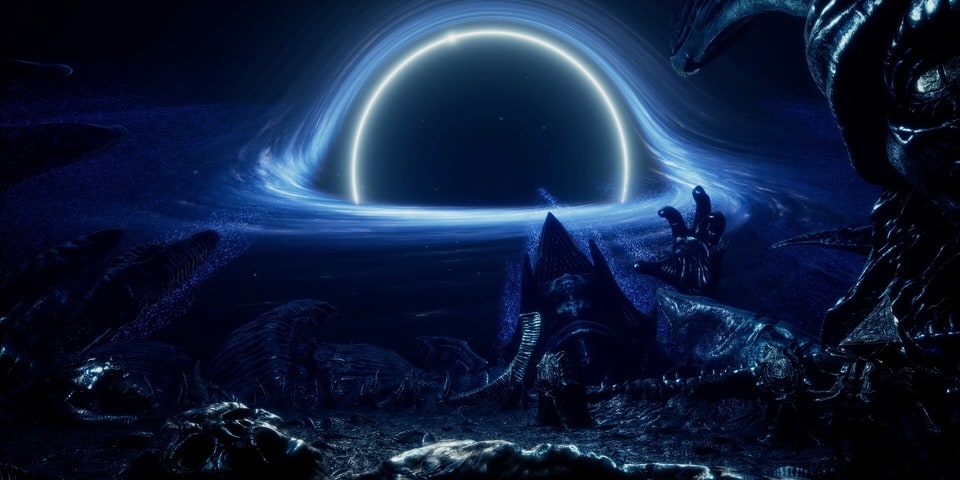
Visually, Necrophosis has a very distinct style, beginning in the barren desert lands of a sort of afterlife and progressing through hellish landscapes before ending in the eerie areas of Lovecraft’s worst nightmares. Cthulhu and other Lovecraftian entities return from their appearances in The Shore, but are treated much more appropriately here and not given villainous monologues to distract from their unknowable terror.
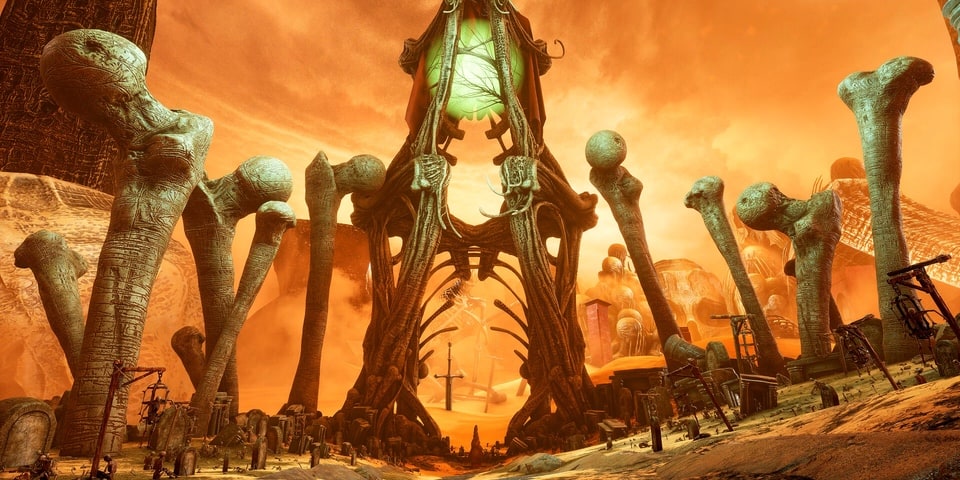
The first-person perspective is very effective as it immerses you in this surreal nightmare, and it often reminded me of the controversial Scorn, a game that I enjoyed but many did not enjoy, while thankfully containing none of that title’s disappointing combat. Exploration is mostly linear, although there are some branching areas that you must fully venture into to collect items and solve environmental puzzles.
The puzzles here are almost entirely of the “find an object and insert it somewhere else” variety, but the body horror aspects elevate it above the simple touches of many other games. Rather than keys or access cards, the items you’ll collect are often gruesome body parts and viscera. I often wondered what exploring the world of Necrophosis in VR would add to the experience and, like The Shore’s own translation, I’m hoping for a PC VR port in the future.
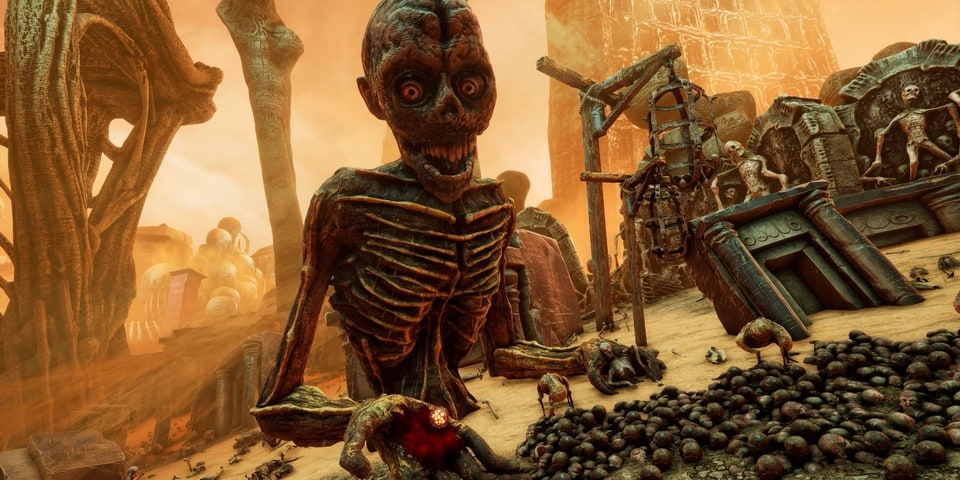
While navigating your way through the nightmarish landscapes of Necrophosis is fairly straightforward, there are hidden collectibles and interactions for trophies and achievements that reward deeper analysis of the environment. These are welcome as the backgrounds are full of disgusting details and gruesome sights. Whether you’re ripping your head off and placing it on a supernatural device or digging your hands into the heart of a suffering prisoner, there’s a real physical dimension to the game that helps ground its supernatural aspects.
One of the most memorable moments of such interaction is a puzzle midway through the game in which you must control a small insect-like drone to bypass a giant enemy and pave the way for safe progression. The change in scale here highlights how nothing in the game feels like it’s being played according to normal human rules.
Necrophosis is not without its flaws, the main one being that the puzzles sometimes feel repetitive and lack the variety to last the duration of the game. The tangible feeling of discomfort that the beginning of the game engenders is diluted by repeating the same body horror tropes over and over again. It’s an unfortunate aspect, but the same criticisms could also be leveled at Scorn and Necrophosis shares the game’s length and doesn’t overstay its welcome.